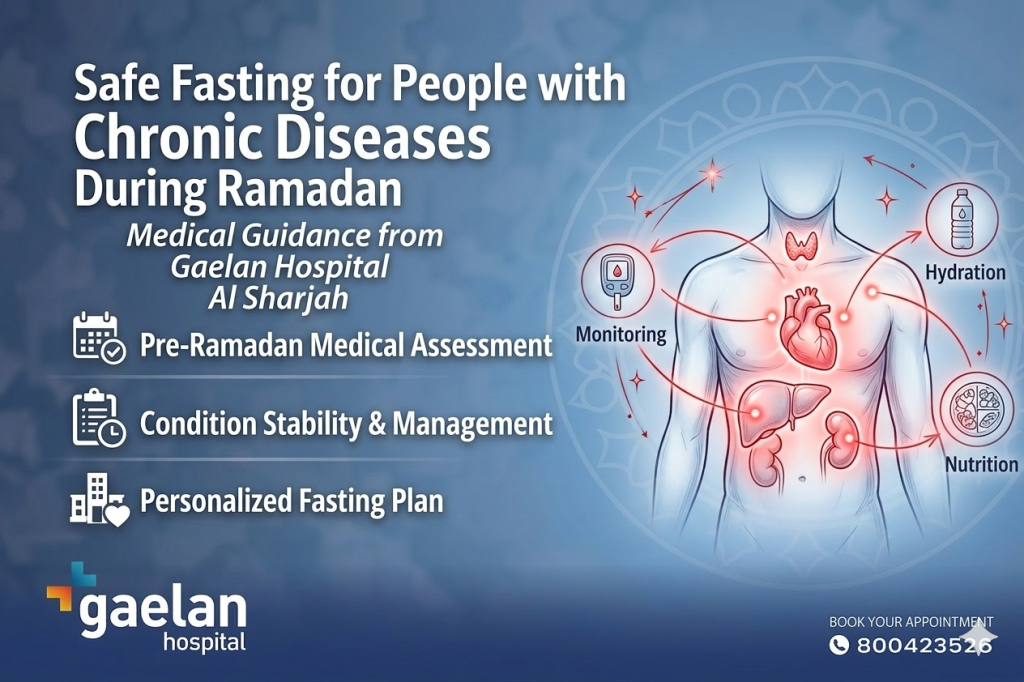
Ramadan is a time of spiritual reflection, self-discipline, and community. Fasting from dawn to sunset is an important act of worship for many. However, for individuals living with chronic diseases, fasting requires careful planning to ensure health and safety.
At Gaelan Hospital, Al Sharjah, patient well-being is our top priority. This guide helps patients and families understand when fasting is safe, when caution is needed, and how to fast responsibly during Ramadan under medical supervision.
Can People with Chronic Diseases Fast During Ramadan?
Yes—many people with chronic conditions can fast safely, provided their condition is stable and they follow medical advice. Fasting affects blood sugar levels, blood pressure, hydration, and medication timing, which may impact certain health conditions.
Before deciding to fast, at Gaelan Hospital, Al Sharjah, we recommended our patients undergo a pre-Ramadan medical assessment to evaluate:
Who Should Not Fast?
Fasting may not be safe for some patients. At Gaelan Hospital, Al Sharjah, our Medical advice may recommend avoiding fasting in cases such as:
Islam emphasizes the preservation of health. Patients who are medically advised not to fast are religiously exempt.
Safe Fasting Tips for Common Chronic Conditions
Diabetes
Fasting can increase the risk of low or high blood sugar.
At Gaelan Hospital, Al Sharjah , our Medical advice includes:
Warning signs: dizziness, sweating, shaking, confusion, extreme fatigue
High or Low Blood Pressure
Dehydration and irregular meals may affect blood pressure control.
Tips:
Heart Disease
Patients with stable heart conditions may fast with medical supervision.
Key recommendations from our specialist at Gaelan Hospital, Al Sharjah
Medication timing may need adjustment
Thyroid Disorders
Most patients with thyroid conditions can fast safely.
Guidance from our specialist at Gaelan Hospital, Al Sharjah:
Rheumatoid Arthritis & Chronic Pain
Long fasting hours may increase stiffness and fatigue.
Helpful practices:
Fatty Liver Disease
When done correctly, fasting may support metabolic health.
Recommendations:
Medication Management During Ramadan
A personalized medication plan ensures safety throughout Ramadan.
Healthy Eating During Ramadan
Hydration Is Essential
Dehydration is a common risk during fasting, especially in warm weather.
Hydration tips:
When Should You Break the Fast?
Break your fast immediately and seek medical care if you experience:
Health and safety always come first.
At Gaelan Hospital, Al Sharjah, Our Medical specialist advises
Fasting during Ramadan can be safe and spiritually fulfilling for many patients with chronic diseases—when done responsibly and under medical supervision.
📌 We encourage all patients with chronic conditions to consult their doctor before Ramadan to create a personalized fasting plan.
A safe Ramadan is a healthy Ramadan. At Gaelan Hospital, Al Sharjah: 800423526
Yes. A pre-Ramadan medical consultation is essential for patients with chronic conditions. Your doctor will assess your health status, adjust medications if needed, and advise whether fasting is safe for you.
No. Checking blood sugar does not break the fast. Regular monitoring is strongly recommended for patients with diabetes to prevent complications during fasting hours.
Many patients with well-controlled diabetes can fast safely under medical supervision. However, patients with uncontrolled diabetes or frequent hypoglycemia may be advised not to fast.
Most patients with thyroid disorders can fast safely. Proper medication timing and consistency are important. Always follow your doctor’s instructions