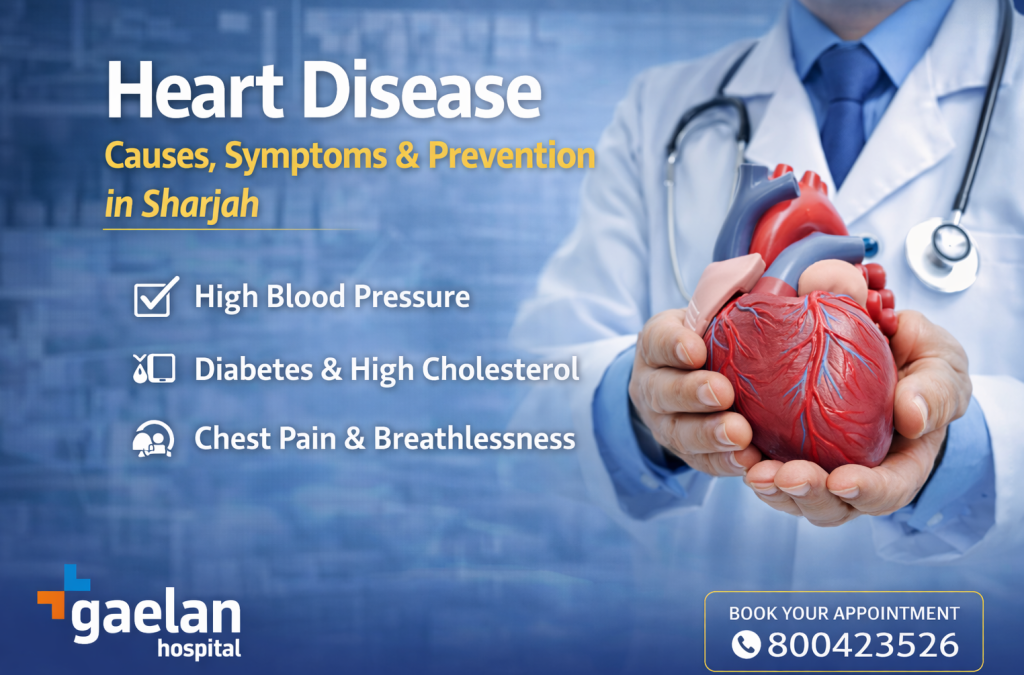
Heart disease often develops silently — many people live with risk factors for years before the first warning sign appears. Chest discomfort, breathlessness, fatigue, or sudden palpitations are frequently ignored until they become serious.
Understanding why heart disease happens, how it shows early symptoms, and what you can do to prevent it is the first step toward protecting your heart health.
What Is Heart Disease?
Heart disease is a broad term covering conditions that affect:
Heart disease is increasingly seen in younger adults, mainly due to lifestyle, stress, diabetes, and high blood pressure.
Common Causes of Heart Disease
Heart disease rarely has a single cause. It usually develops due to multiple long-term factors:
Uncontrolled blood pressure strains the heart and damages arteries over time.
Diabetes significantly increases heart attack risk.
Fatty deposits narrow blood vessels and reduce blood flow to the heart.
Tobacco damages blood vessels and accelerates plaque buildup.
Excess weight forces the heart to work harder and worsens other risk factors.
Long working hours, stress, and irregular sleep patterns silently impact heart health.
Genetics can increase risk — especially when combined with lifestyle factors.
Early Symptoms of Heart Disease (Do Not Ignore These)
Heart disease symptoms vary between individuals and may not always feel severe.
Common warning signs include:
Important: Women and diabetic patients may experience atypical symptoms, such as fatigue or mild discomfort rather than severe chest pain.
When Should You See a Cardiology Clinic?
You should consult a cardiologist in Sharjah if you:
Early evaluation can prevent heart attacks and long-term damage.
How Heart Disease Is Diagnosed
At a cardiology clinic, diagnosis focuses on accuracy and early detection, which may include:
Not every patient needs advanced tests — ethical cardiology focuses on necessary investigations only.
Heart Disease Prevention: What You Can Do Today
Preventing heart disease is possible, even if you already have risk factors.
Key prevention steps:
Prevention is always easier — and safer — than treatment.
Why Choose Gaelan Hospital for Heart Care in Sharjah?
Choosing the right cardiology clinic matters — especially when symptoms are subtle.
At Gaelan Hospital, Sharjah:
Heart care is not just about treating disease — it’s about protecting your future health.
Yes. Many patients have silent heart disease, especially those with diabetes or high blood pressure.
Adults above 35 — or earlier if you have risk factors — should consider a baseline cardiac evaluation.
Not always, but any chest pain should be medically evaluated to rule out cardiac causes.
Yes. Consistent lifestyle changes significantly reduce heart attack and stroke risk.
Yes. Women often have less typical symptoms like fatigue, nausea, or breathlessness.
This depends on individual risk factors and findings — your cardiologist will guide you.