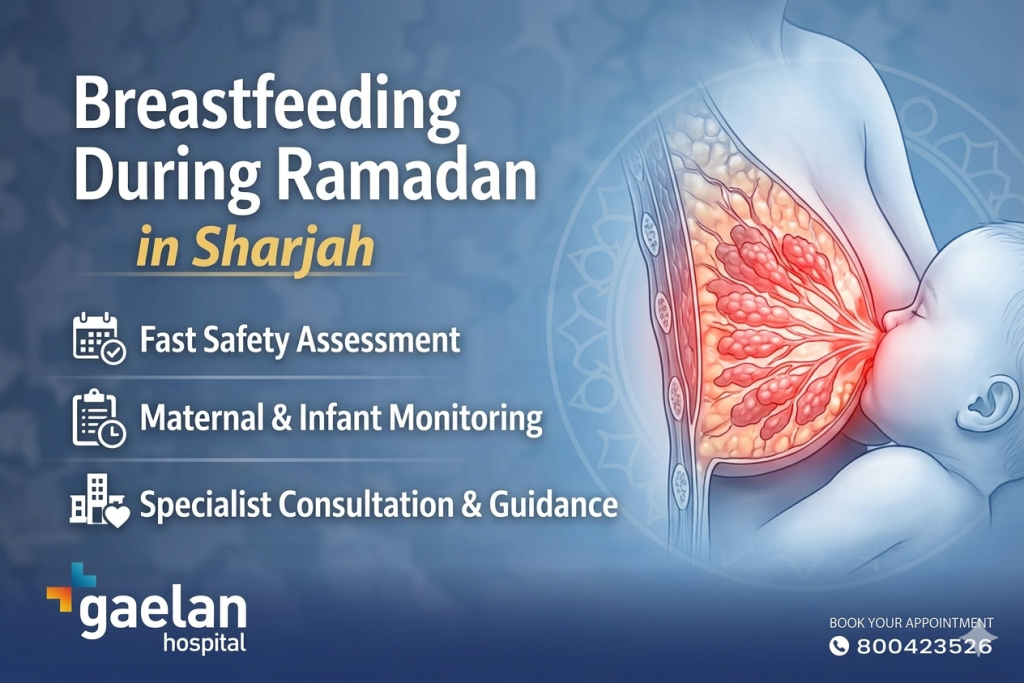
Breastfeeding is a critical period that places increased nutritional and fluid demands on a mother’s body. During Ramadan or other periods of fasting, many breastfeeding mothers consider whether fasting is safe for them and their babies. At Gaelan Hospital, from a medical perspective, the safety of fasting during breastfeeding depends on multiple individual factors and should be carefully evaluated.
This article offers medical guidance to help breastfeeding mothers make informed decisions, prioritizing both maternal health and infant nutrition.
Is Fasting Safe During Breastfeeding?
Breast milk production requires additional calories, fluids, and essential nutrients. When a breastfeeding mother fasts for extended hours, especially without adequate hydration and nutrition during non-fasting periods, it may affect both her health and milk production.
Medically, fasting during breastfeeding may be safe for some mothers, but it is not recommended for all. At Gaelan Hospital, our lactation specialists evaluate safety based on several key factors:
Close monitoring is essential if fasting is attempted.
Potential Effects of Fasting on Breastfeeding
Inadequate fluid and calorie intake may lead to a reduction in milk supply, particularly in mothers who are exclusively breastfeeding or already have borderline milk production.
Breast milk generally maintains its macronutrient composition; however, prolonged fasting may affect certain micronutrient levels if maternal stores are low.
Fasting may increase the risk of:
Maternal exhaustion and dehydration can indirectly affect breastfeeding effectiveness.
Medical Recommendations for Breastfeeding Mothers Who Choose to Fast
If a breastfeeding mother is healthy and decides to fast, at the Gaelan Hospital, Al Sharjah, our specialists strongly advise:
Pre-dawn meals should include:
Post-fast meals should include:
Skipping meals or consuming nutrient-poor foods increases the risk of milk reduction.
Signs that require attention include:
Any concerning changes should prompt immediate medical consultation.
Fasting should be discontinued if the mother experiences:
Medical advice should be sought promptly.
Importance of Medical Consultation
Before starting a fasting period, breastfeeding mothers should consult a physician or lactation specialist at the Gaelan Hospital, Al Sharjah. Our specialists can provide individual medical assessments to determine whether fasting is appropriate and to offer personalized nutritional guidance if needed.
Yes. Some mothers experience no change, while others may notice a decrease, particularly if fluid and calorie intake is insufficient.
Exclusive breastfeeding places higher nutritional and hydration demands on the mother. Medically, fasting during this period is generally not recommended, especially for infants under 6 months.
Some mothers may require supplements such as iron, calcium, or multivitamins, but these should only be taken under medical supervision.